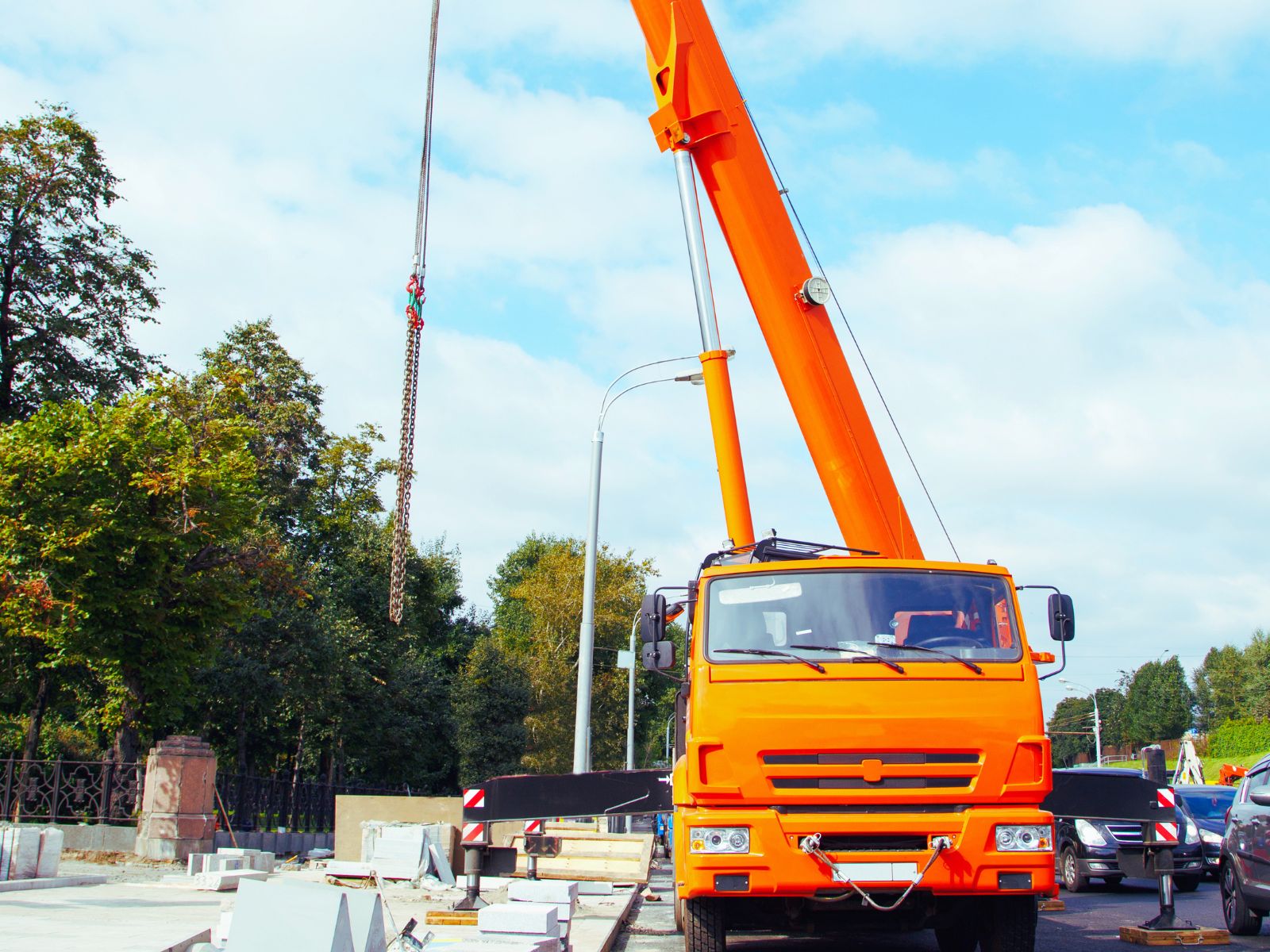
In construction, maintenance, and industrial operations, reaching elevated or hard-to-access areas is often one of the most challenging aspects of the job. Whether it’s lifting materials onto a rooftop, installing signage on a tall structure, or handling equipment in tight urban spaces, traditional lifting solutions don’t always offer the flexibility or reach required. This is where a crane truck with a fly jib becomes an invaluable asset.
A crane truck equipped with a fly jib combines mobility, versatility, and extended reach in a single machine. Understanding how this equipment works and why it’s so effective, can help businesses and contractors make smarter decisions when tackling high-reach access problems.
What Is a Fly Jib?
A fly jib is an extension that attaches to the end of a crane’s main boom. It effectively increases the crane’s reach, both vertically and horizontally, allowing operators to access areas that would otherwise be out of range. Unlike the main boom, which is typically telescopic or hydraulic, the fly jib is often a fixed or lattice-style extension designed for additional reach rather than heavy lifting.
When mounted on a crane truck, the fly jib transforms an already capable machine into a highly adaptable solution for complex lifting scenarios.
Enhanced Reach Without Repositioning
One of the primary advantages of a fly jib is its ability to extend the crane’s working radius. In many job sites, especially in dense urban environments or confined industrial areas, there is limited space to reposition equipment. Without a fly jib, operators might need to move the crane multiple times to reach different points, which costs time and increases risk.
With a fly jib, the crane can access distant or elevated points from a single setup position. This not only improves efficiency but also minimises disruption to surrounding operations. For projects with tight deadlines, reducing the need for repositioning can make a significant difference.
Access to Difficult Angles and Obstacles
High-reach tasks are rarely straightforward. Obstacles such as buildings, power lines, scaffolding, or uneven terrain can complicate lifting operations. A crane truck with a fly jib offers greater flexibility in maneuvering around these obstacles.
Because the fly jib extends beyond the main boom, it allows operators to “reach over” or “reach around” barriers. This capability is especially useful for tasks like rooftop installations, bridge maintenance, or working within industrial plants where obstructions are common.
Improved Precision in Placement
In many applications, it’s not just about reaching a high point, it’s about placing materials or equipment precisely. The extended reach of a fly jib allows for finer control when positioning loads in tight or elevated spaces.
For example, when installing HVAC units on a rooftop or placing structural components in a specific location, even small adjustments can be critical. The fly jib provides the additional range and control needed to perform these tasks safely and accurately, reducing the likelihood of errors or rework.
Versatility Across Multiple Industries
Crane trucks with fly jibs are not limited to one type of job. Their versatility makes them suitable for a wide range of industries, including construction, telecommunications, utilities, and infrastructure maintenance.
In construction, they are used for lifting materials to upper floors or assembling structures. In telecommunications, they help install antennas and towers. Utility companies rely on them for maintaining power lines and poles. This adaptability means that a single piece of equipment can handle multiple tasks, improving overall operational efficiency.
Cost and Time Efficiency
While adding a fly jib may seem like an additional investment, it often leads to cost savings in the long run. By eliminating the need for multiple machines or repeated repositioning, projects can be completed more quickly and with fewer resources.
Additionally, the ability to handle complex lifts with a single crane truck reduces labor requirements and minimises downtime. For businesses operating on tight budgets or schedules, these efficiencies can have a substantial impact.
Enhanced Safety on the Job Site
Safety is always a top priority in lifting operations. A crane truck with a fly jib contributes to a safer work environment by reducing the need for risky maneuvers or improvised solutions.
By providing the necessary reach and flexibility, the equipment allows operators to maintain stable positioning while accessing difficult areas. This reduces the likelihood of accidents caused by overextending the crane or working in unsafe configurations. Furthermore, fewer repositioning movements mean less exposure to potential hazards on the ground.
Conclusion
High-reach access problems are a common challenge across many industries, but they don’t have to slow down progress. A crane truck with a fly jib offers a practical, efficient, and safe solution by extending reach, improving flexibility, and enabling precise load placement.
For businesses looking to enhance productivity and tackle complex lifting tasks with confidence, investing in this type of equipment can be a game-changer. By combining mobility with extended capability, crane trucks with fly jibs ensure that even the most difficult-to-reach areas are well within reach.