In construction, logistics, infrastructure development, and heavy transportation, lifting and moving loads efficiently is critical. Among the most commonly used lifting vehicles are crane trucks and Hiab trucks. While these terms are sometimes used interchangeably, they are not the same, and understanding their differences can help businesses choose the right equipment for safety, productivity, and cost efficiency.
This blog explores the key differences between crane trucks and Hiab trucks, including their design, functionality, applications, advantages, and limitations.
What Is a Crane Truck?
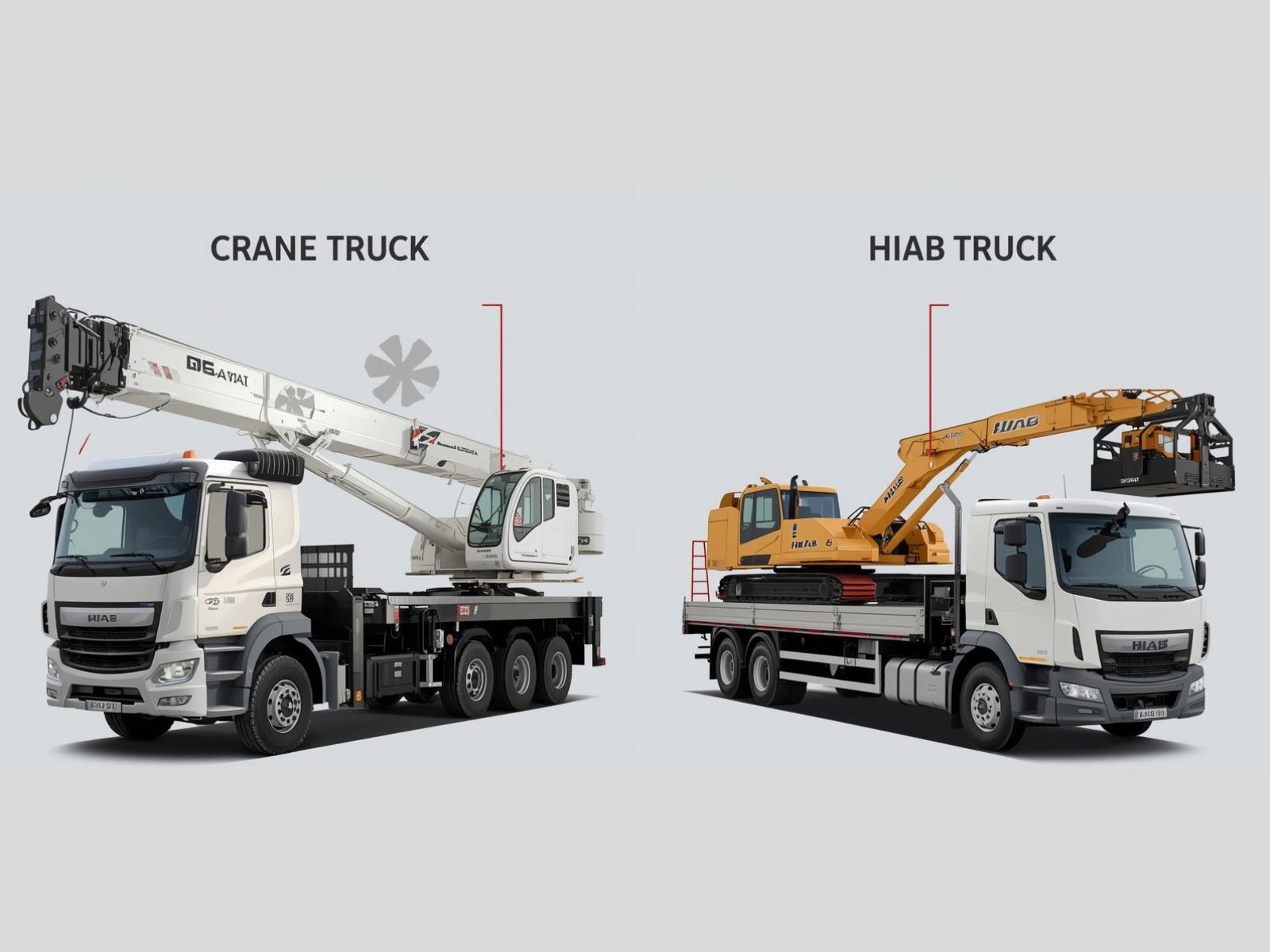
A crane truck is a vehicle-mounted crane designed primarily for heavy lifting. It consists of a powerful crane installed on a truck chassis, allowing it to transport and lift extremely heavy loads at construction or industrial sites.
Crane trucks are commonly used for:
- Lifting steel structures
- Placing concrete components
- Installing heavy machinery
- Bridge and road construction
- Power plant and refinery work
Key Features of Crane Trucks
- Large telescopic or lattice boom
- High lifting capacity (often ranging from 10 tons to over 100 tons)
- Outriggers for stability during lifting
- Rotating superstructure (360-degree rotation)
- Operated by a certified crane operator
Crane trucks focus on vertical lifting strength and reach, rather than flexibility or quick material handling.
What Is a Hiab Truck?
A Hiab truck refers to a truck fitted with a loader crane, commonly known as a knuckle boom crane. “HIAB” is actually a brand name (Hydrauliska Industri AB), but the term has become widely used to describe all truck-mounted loader cranes.
Hiab trucks are designed for loading, unloading, and positioning materials with precision and efficiency.
Typical uses include:
- Transporting building materials
- Delivering pallets, containers, and equipment
- Handling timber, pipes, and steel
- Urban construction and logistics
- Utility and maintenance work
Key Features of Hiab Trucks
- Articulated (folding) boom
- Mounted behind the cab or at the rear
- Moderate lifting capacity (usually 1–30 tons)
- Can be operated by the truck driver
- Compact design for tight spaces
Hiab trucks are ideal for jobs requiring frequent loading and unloading.
Main Differences Between Crane Trucks and Hiab Trucks
1. Lifting Capacity
Crane Trucks
- Designed for heavy-duty lifting
- Can lift extremely heavy loads at significant heights
- Suitable for large-scale construction and industrial projects
Hiab Trucks
- Lower lifting capacity compared to crane trucks
- Best for light to medium loads
- Emphasis on versatility rather than maximum weight
Verdict: If you need to lift massive components, a crane truck is the better choice.
2. Boom Design
Crane Trucks
- Use telescopic or lattice booms
- Extend vertically for high lifts
- Focus on height and reach
Hiab Trucks
- Use articulated (knuckle) booms
- Fold and unfold for flexibility
- Allow precise positioning in confined areas
Verdict: Hiab trucks are more flexible; crane trucks are more powerful.
3. Primary Function
Crane Trucks
- Primarily used for lifting and placing
- Often stay in one position for extended periods
- Function more like mobile cranes than delivery vehicles
Hiab Trucks
- Designed for transport + lifting
- Load, transport, and unload materials independently
- Reduce the need for separate cranes or forklifts
Verdict: Hiab trucks offer better all-in-one functionality.
4. Mobility and Setup Time
Crane Trucks
- Require setup time (deploying outriggers, leveling)
- Often need traffic control and site preparation
- Less practical for multiple short lifts
Hiab Trucks
- Quick setup and deployment
- Ideal for multiple deliveries in a day
- Easy to operate in urban environments
Verdict: Hiab trucks are faster and more mobile.
5. Space Requirements
Crane Trucks
- Require large open spaces to operate safely
- Not suitable for narrow streets or congested areas
Hiab Trucks
- Compact and maneuverable
- Can operate in tight spaces, warehouses, and city streets
Verdict: Hiab trucks excel in space-restricted environments.
6. Operator Skill and Licensing
Crane Trucks
- Must be operated by a certified crane operator
- Require extensive training and experience
- Often need additional crew members
Hiab Trucks
- Can often be operated by the truck driver
- Training is still required but less complex
- Fewer personnel needed
Verdict: Hiab trucks are easier and cheaper to staff.
7. Cost and Operating Expenses
Crane Trucks
- Higher purchase and rental costs
- Increased fuel consumption
- Higher insurance and maintenance costs
Hiab Trucks
- More affordable to buy or rent
- Lower operating costs
- Excellent return on investment for logistics and construction companies
Verdict: Hiab trucks are more cost-effective for routine lifting tasks.
Applications: When to Use Each
Use a Crane Truck When:
- Lifting extremely heavy loads
- Working on large infrastructure projects
- Installing tall structures
- Handling oversized industrial components
Use a Hiab Truck When:
- Delivering construction materials
- Loading/unloading pallets or containers
- Working in urban or confined areas
- Performing utility or maintenance work
- You need speed and versatility
Safety Considerations
Both crane trucks and Hiab trucks must comply with strict safety standards. However:
- Crane trucks involve higher risk due to heavier loads
- Hiab trucks require careful load balance and operator awareness
- Proper training, inspections, and load calculations are essential for both
Choosing the right vehicle reduces the risk of accidents and equipment damage.
Environmental and Efficiency Factors
Hiab trucks hire are often considered more environmentally efficient because:
- They reduce the need for separate lifting equipment
- They minimize idle time
- They lower fuel consumption for smaller jobs
Crane trucks, while powerful, are best reserved for jobs that truly require their capacity.
Conclusion
While both crane trucks and Hiab trucks serve essential roles in lifting and transportation, they are designed for different purposes.
- Crane trucks excel in heavy lifting, large-scale construction, and industrial projects.
- Hiab trucks shine in versatility, efficiency, and everyday material handling.
Understanding the differences allows businesses to choose the right equipment, improve productivity, reduce costs, and enhance safety on the job site.